
On the Shoulders of the Three Giants Information Theory, Semi-Group Theory, and Uncertain Reasoning with Information-Theoretic Applications to Human
Abstract
This paper provides a first-time ever unification of information theory, semi-group theory with the theory of uncertain reasoning, through functional perspective. Fundamentally, the threshold theorems for the Inference Functional (IF) were devised. Furthermore, numerical experiments are illustrated. Some information-theoretic applications to Human Computer Interaction (HCI) are provided. The paper ends with concluding remarks, open problems, and future research pathways. The analytical derivations and numerical evidence collectively demonstrate that the proposed inference functional exhibits stable and predictable behavior under varying entropic parameters, offering a mathematically rigorous bridge between uncertainty modeling and algebraic structures. This reinforces the reliability of the unified framework for advanced information-theoretic reasoning and related applications.
Keywords:Rényi generalized entropiesInformation theorySemi-group theoryUncertain reasoning
1. Introduction
A supplementary portion of the research carried out in [1] is provided by the current work. The authors believe that the task is now complete and can be understood by using both analytical expressions and illustrative data to explain the newly developed study outcomes. The current paper is a substantial extension of an accepted paper [1].
The main contributions of [1] are:
I. Providing the full detailed proofs of the limit theorem as well as the full proofs of Rényi Generalized Entropies RGEs extended properties and finding the discrete time domain PV-updates.
II. Providing these extended properties physical interpretations.
This letter has the following major contributions.
I. Novel characterization of for q > −1, q ≠ 0, inference process Uq(K) by a functional equation is devised. II. First time unification of the inference process Uq(K) for q > −1, q ≠ 0 with group theory is obtained. III. Showing the significant information theoretic parameter r on the overall behaviour of inference process functional for both extensive and non-extensive values of the parameter q.
IV. Highlighting the significance role of information theory to advance Human Computer Interaction (HCI). V. The exposition of some emerging open problems.
The structural flow of the current paper reads:
I. Introduction.
II. Definitions.
III. Novel characterization of the inference process Uq (K) for q > −1, q ≠ 0 by a functional equation.
IV. Unification of the inference process Uq (K) for q > −1, q ≠ 0 with Semi-Group theory.
V. The threshold theorems for the Inference Functional (IF).
VI. Numerical experiments.
VII. Information-theoretic applications to humaa computer interaction.
VIII. Concluding remarks, open problems, and funwe research pathways.
2. Definitions
I. The Belief (Bel) function: The Bel function is defined by assuming that it satisfies the axioms of probability.
Specifically, fix a finite propositional language L and let SL be the set of sentences for this language. In this context, Bel: SL→[0,1] is a probability function on SL if for all θ, ϕ ϵ SL.
− If ⊢ ( ↔ ∅), then Bel ( ) = (∅).
− If ⊢ , then Bel ( ) = 1, and Bel (¬ ) = 0.
− If ⊢ ( ⋀∅) is false, then Bel ( ⋁∅) = ( ) + (∅).
L L L → J → →
II. Definition of the set vectors V (K) [1]: Let us define the set V (K), V (K) = {x ∈ R /x A →, x ≥ 0}.
K= bk L L L →
III. The ME inference process, ME [1]: ME reads as ME (K) = x , which maximizes Shannonian entropy ( − ∑ xilogxi ), with the convention xlogx = 0 when x = 0.
L L L → L J q+1 −1/q
IV. Uq(K): We write Uq(K) as Uq(K) = that x ∈ V (K) for which (∑ x ) is maximal.
i=1 i
V. A functional equation is one that has an undefined function. Functional equations can be used to characterise the fundamental functions as one of their many uses. An illustration of a functional equation is the Fibonacci number sequence [2].
VI. Semigroups [3]: a binary operation ∘ on a set S is a map ∘∶ S × S → S.
If for all elements x, y, z ∈ S, x ∘ (y ∘ z) = (x ∘ y) ∘ z, then this operation is associative. A non-empty set having an associative binary operation is known as a semigroup. As a result, semigroups are among the most fundamental types of algebraic structures.
A semigroup, according to some definitions, is a set equipped binary operation "empty semigroup" that may or may not be empty. That is, the 'empty semigroup' is formed by the empty set. From the perspective of category theory, this is advantageous. But keep in mind that if a semigroup might be empty, other definitions must be changed.
Many algebraists are drawn to the theory of semigroups because of its applicability to formal languages, network analogy, automata theory, and other fields. We examined various contexts in which semigroups are applied in Section 2. We found some instances of regular, E-inversive, and inverse semigroup structures in biology, sociology, and other fields.
3. Novel Characterization of the Inference Process ( ) for > − , ≠
via Functional Equation
This section provides a breakthrough in information theory as it characterizes RGEs through the characterization of the IF by a functional equation.
Theorem 1. The IF, f(x) = x , q > −1, q ≠ 0 is well defined. Moreover, if Χ is any arbitrary enumeration set, then IF is characterized by the functional equation:
f(xy) = f(x)f(y), for all x, y ∈ Χ.
Proof: to start with, we must prove that IF is well defined. To obtain that, it suffices to show that it is impossible that for any x, y ∈ Χ with x ≠ y, f(x) = f(y).
q+1 q+1 x x
Let f(x) = f(y). Hence, x = y , equivalently (q + 1)log( ) = 0. Therefore, (q + 1) = 0 or log( ) = 0. The statement (q + 1) = 0 yields a contradiction. This implies log( ) = 0, or x = y , proving the well-definiteness of IF.
Sufficiency: For all x, y ∈ Χ, f(x) = x , q > −1, q ≠ 0, we have Eq. (1).
q+1 q+1 q+1 (1) f(xy) = (xy) = x y = f(x)f(y).
Necessity: if the suggested functional equation, as in Eq. (2).
f(xy) = f(x)f(y), for all x, y ∈ Χ holds. (2) Differentiating Eq. (2), yields Eq. (3).
∂f(xy) df(x)
y = f(y). (3)
∂x dx
Setting f(1) = q + 1. Now putting x = 1 in Eq. (3), implies Eq. (4).
∂f(y) df(1) y = f(y). (4) ∂x dx Eq. (4) with x → y implies Eq. (5).
df(y) y = (q + 1)f(y). (5) dy It follows by Eq. (5) that Eq. (6) holds:
q+1 df(y) q
y = (q + 1)y f(y). (6)
dy
It can be verified that Eq. (6) implies Eq. (7).
q+1df(y) q
y −(r+1)y f(y)
dy (7) = 0.
(yq+1)2
d f(y) q+1 q+1
Therefore, ( ) = 0. Consequently, f(y) = cy . Letting f(1) = 1. Hence, c = 1, implying f(y) = y .
dy yq+1
The proof is done.
In what follows, let Φ denote the set of IFs by Φ = {f(x): f(x) = x , ∑x∈Χ f(x) is minimal, q > −1, q ≠ 0, Χ is any arbitrary enumeration set, f(xy) =
f(x)f(y)}.
4. Unification of the Inference Process ( ) for > − , ≠ with Semi-Group Theory
Theorem 2. The above defined set Φ is an abelian(commutative) semi-group, with no identity element. Proof: to prove the closure of the binary operation, let f(x) ∈ Φ, for all x ∈ (0,1), then it holds that is minimal. For q > −1, q ≠ 0 , we have by Eq. (8).
2(q+1) q+1 2(q+1) q+1 (8) x < x , which directly implies ∑x∈Χ x < ∑x∈Χ x .
The above inequality is also satisfied for all the non-extensive values of the parameter q.
2 2 2(q+1)
By the definition, f(x )=(f(x)) . Then showing the minimality of ∑x∈Χ x , which clearly follows from Eq. (8). The binary operation is associative. To see this, we have for all f(x), f(y), f(z) ∈ Φ. Consequently,
q+1 q+1 q+1
∑x∈Χ x , ∑y∈Χ y and ∑z∈Χ z are minimal for q > −1, q ≠ 0. By the definition, we reach Eq. (9).
f(xyz) = f(x)f(y)f(z). (9)
q+1 q+1 q+1 q+1
We must prove the minimality of ∑x,y,z∈Χ(xyz) , equivalently by Eq. (9), (∑x∈Χ x )(∑y∈Χ y ) ( ∑z∈Χ z ) is minimal. This is immediate from the definition.
As for the identity element, let the contradiction be true, that is an identity element f(e) ∈ Φ satisfying Eq. (10).
f(xe) = f(x)f(e) = f(x). (10)
(−1)+1
This implies f(e) = 1, which is only possible if f(e) = x . This applies whenever q = −1 (contradiction) This completes the proof.
5. The Threshold Theorems for the Inference Functional
In what follows, a new theorem is devised, the Threshold Theorem of the Inference Functional (TTIF). We need the following important well-known theorem in mathematical analysis [4] as it is necessary to prove our newly devised results in Theorem 3.
The following theorem outlines a straightforward method for identifying where f is increasing or decreasing for differentiable functions.
Theorem 3. Let f be a function that is defined and differentiable on an open interval (c, d).
′ (11) If f (x) > (< 0) for all x ∈ (c, d), then f is increasing (decreasing) on (c, d).
L L L
Recalling, Uq(K) to be Uq(K) = x ∈ Χ which minimizes ∑x∈Χ f(x),with Uq(K) = x ∈ Χ that minimizes ∑x∈Χ x , q > −1, q ≠ 0, Χ is any arbitrary enumeration set.
Theorem 4. For f(x) = x , q > −1, q ≠ 0, Χ is any arbitrary enumeration set, it holds that:
I. f(x) is well-defined.
II. f(x) is forever decreasing in x if and only if q > −1, q ≠ 0.
III. f(x) is forever increasing in x if and only if q < −1.
IV. f(x) is forever decreasing in q if and only if x ∈ (0,1).
V. f(x) is forever increasing in q if and only if x ∈ (1, ∞).
Proof:
(i) Assume that Eq. (12) holds:
f(x) = f(y), x ≠ y for q > −1, q ≠ 0. (12) Thus, Eq. (13) follows.
(q + 1)l n ( ) = 0. (13)
Based on Unequality (14)
f(x) = f(y), x ≠ y for q > −1, q ≠ 0. (14) Eq. (15) follows.
l n ( ) = 0. (15)
Hence, x = y (contradiction). Therefore, f is well-defined.
∂f q q q
(ii) We have = (q + 1)x . By the preliminary theorem, (i) holds if and only if (q + 1)x > 0. Since x is forever positive.
Following the same argument proves (iii).
∂f q+1
As for (iv), = (lnx)x . According to the preliminary theorem, (iii) holds if and only if lnx < 0, which holds if and only x ∈ (0,1).
The proof of (iv) is like (v).
6. Numerical Experiments
In this section, numerical experiments are determined for the family of families characterized by the IF, f(x) = x , q > −1, q ≠ 0, Χ is any arbitrary enumeration set.
6.1 Extensive Information Theoretic Parameter r
For the extensive values of the parameter q, q ∈ (−∞, 1]⨆(1, ∞).
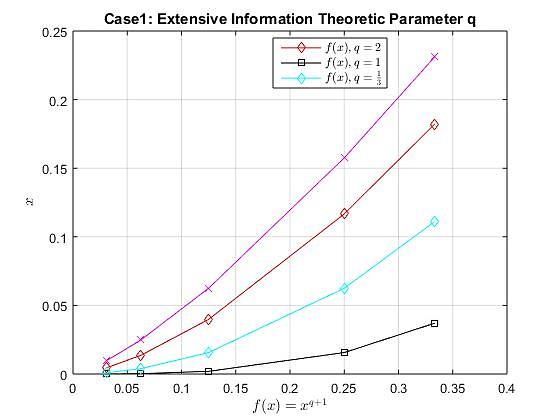
Fig. 1 presents strong evidence of the significant impact of the extensive theoretic parameter on the overall behaviour of the IF, f(x) = x . For q = −1, the IF is a straight line. As q increases, the IF starts to take the curve shape until q = 2, it starts to be linear.
6.2 Non-extensive Information Theoretic Parameter
For the non-extensive values of the parameter q, q ∈ (0.5,1).
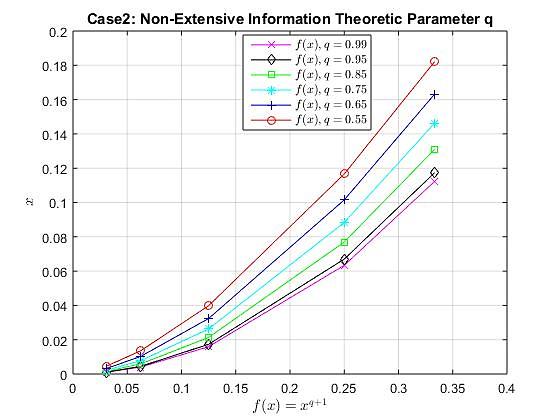
Fig. 2 depicts the strong impact of the non-extensive information theoretic parameter q(0.5 < q < 1). The IF decreases for x = , q(0.5 < q < 1). As x decreases the curve starts to be linear, for positive x. Fig. 2 shows the increasability of the IF in x for all the non-extensive information theoretic parameter q. It is also observed that this numerical experiment agrees with the findings of Theorem 4, as the graph decreases in r for all x satisfying 0 < x < 1. This provides an evidence of the information theoretic impact on the IF.
7. Information-Theoretic Applications to Human Computer Interaction
Shannon's information theory [5], developed in 1948, has been widely recognized and applied across various fields. While Fitts' law and Hick's law initially connected information theory with psychology, the direct impact of information theory on HCI has been less evident. However, recent developments show that information theory is now beginning to influence and contribute to HCI research, marking a new era of exploration and application in this domain.
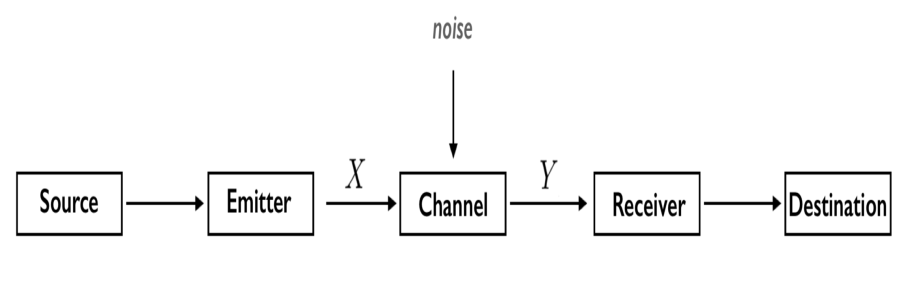
The communication scheme introduced by Shannon in digital communication highlights the role of entropy as a measure of information, as depicted by Fig. 3 [5]. It involves a source generating messages represented by a random variable X, which are encoded, transmitted through a channel, and decoded at the destination as Y [5]. The process focuses on the probability of outcomes, with concepts like entropy, mutual information, and channel capacity being key in understanding and optimizing human-computer communication [5]. In the context of HCI, Shannon's information theory is applied to the concept of pointing, where Fitts' law models the relationship between movement time and index of difficulty. Fitts also introduced the Index of Performance, later termed throughput by [6], to measure the effective speed of data transmission in engineering, calculated as the amount of transmitted information divided by the time taken, typically measured in bits per second. This application of information theory helps analyze throughput in HCI tasks, extending beyond Fitts' law to consider input communication in noisy channels and sequential processes like text entry. Hick's Law, introduced to HCI in the 1980s [7], [8], explores the relationship between the number of choices and the time it takes to decide. While some researchers debate its relevance in HCI tasks, Hick's Law has been applied to various scenarios in HCI, considering factors like uncertainty and decision-making time. The law's application in interface design remains controversial, with differing perspectives on its significance within the HCI community.
Several recent studies have explored using information theory tools to analyze the transmission of information from users to computers in HCI [9-12], as portrayed by Fig. 4 [5]. Notably, the development of the Bayesian Information Gain (BIG) framework is essential to quantify user input information and reduce computer uncertainty about user goals. By maximizing information gain through feedback, computers can take a more active role in interactions, potentially shifting the balance of control between humans and machines in HCI.

Behavioural economics is a significant approach used to assess how people make decisions [13]. The study [13] selected cognitive biases, such as confirmation bias and order effect, along with social cognitive biases like authority bias and ethnic-name prejudice, through online experimentation and the integration of User Interface (UI) design for trait detection and debiasing measures in online health information seeking.
The study [14] used information theory to explore how humans interact with continuous control sensors in designing digital musical instruments, focusing on the New Interfaces for Musical Expression (NIME) community. The research aims to understand human control accuracy with these sensors, addressing concerns like performance in different control scenarios and the perceptions of designers and researchers. By treating the human-computer system as an information channel and applying information theory concepts, the study [14] shed light on human abilities and informs musical instrument design, ergonomics, and usability considerations.
Moreover, a series of experiments analyzing human performance using different sensors in human-computer interfaces [14]. By applying the Shannon-Hartley theorem, [14] determined the channel capacity of the system in bits per second, showing that subjects communicated more information with certain sensors and control methods at different bandwidth limits. The results [14] contribute to understanding how humans perform in continuous control tasks using sensors, providing insights for designing new interfaces.
The key findings [14] suggested that continuous control can convey information more effectively than pointing, especially at higher movement speeds. Additionally [14], while having more degrees of freedom in control can help novice performers convey more information, exceeding two degrees of freedom may reduce information capacity. Position sensors are recommended over proximity or force sensors for complex control tasks, and expert control consistently outperforms novice performance in various studies. Practitioners [14] should be cautious about overestimating performer control when using force sensing resistors and capacitive sensors, as further investigation is needed to validate these estimations.
The study in [15] has developed new theoretical models and metrics as evaluation tools for UI design, drawing inspiration from thermodynamics and information theory. By viewing UIs as Binary Finite-State Machines (BFSMs) and networked two-way communication channels, the research seeks to connect fundamental scientific theories with practical methodologies in UI design. The proposed [15] metrics and models align with real-world experiences and merit further exploration to enhance UI research and development.
In the context of UI interactions [15], the text explains how these interactions can be seen as Finite-State Machines (FSM) and further as BFSMs by categorizing outcomes as "relevant" or "irrelevant" to the user. Each user action (UAIO) item is considered to have equiprobable outcomes falling into these two categories, leading to a total number of outcomes equal to twice the number of User-Apparent Interface Objects (UAIO) items.
Scientific terminologies [15], like "temperature", often originate from everyday language but acquire more precise meanings through evolution. Temperature scales such as Celsius, Fahrenheit, and Kelvin were developed by choosing specific reference points and dividing the scale evenly between them. Similarly, the text suggests creating a new metric akin to temperature to measure and communicate user feelings about UI design.
Accordingly [15], the concept of Interface Temperature (IT) is introduced as a metric to quantify the number of UAIO in a UI. So, associating the number of UAIO with a "technical temperature scale" (iT) and an "emotional temperature scale" (eT) can be used to represent the cleanliness or cluttering of a UI layout. The IT and eT scales are used to measure the UI conditions based on the number of UAIO, providing potential applications for monitoring user interactions in UI design.
In this model, mutual information II(XX, YY) is viewed as part of the UI's operational mechanism for interactive functions, while the information that meets the user's intended purposes is represented by HH(YY|XX). The dynamic exchange [15] of information during user interaction forms a two-way communication channel model, distinct from Shannon's one-way communication channel model. Information in HH(YY′|XX′) exits the UI to User Systems (UIUS) and transforms into input information HH(XX") for an external UIUS, aligning with the user's original functional needs, as illustrated by Fig. 5 [15]. The relationship between visualization applications and Virtual Environments (VEs) in visual computing was discussed in [16].
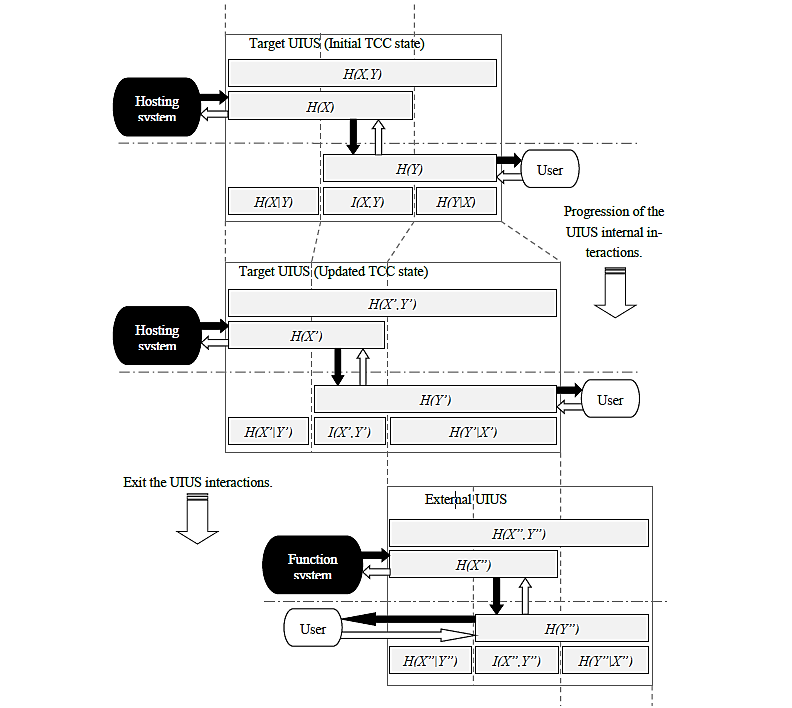
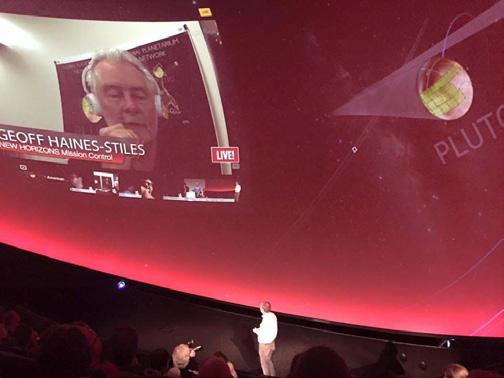
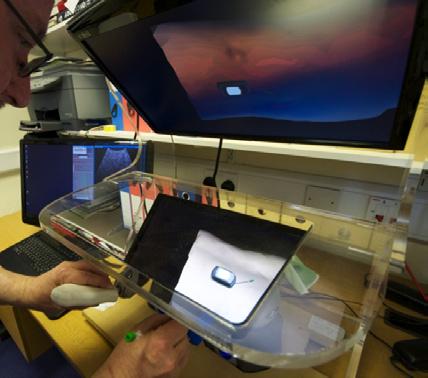
Fig. 6 [16] navigates the exploration of factors influencing the success of VEs used for visualization applications and highlights the importance of identifying fundamental measures that can guide inquiries into why some systems work well while others do not. Designers [16], users, and stakeholders in VEs seek to understand what enables success and what obstacles may impede it, prompting a deeper examination beyond practical factors.
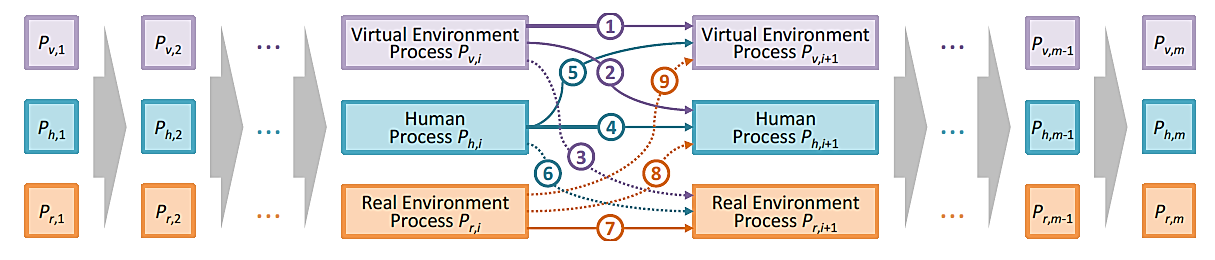
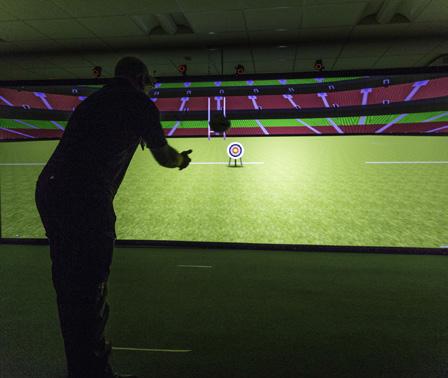
In a VE, interactive events form a processing flow involving two main types of processes: VE processes and human processes, as in Fig. 7 [20]. VE processes involve machine-centric activities like generating images and sounds, while human processes encompass human-centric actions such as attention, perception, and body movements. In mixed reality environments, real environment processes can also influence a participant's reality, leading to complex and detailed sequences of events that can be approximated for practical analysis in VE systems.
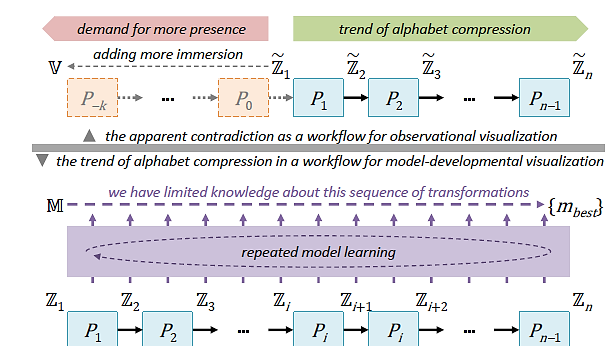
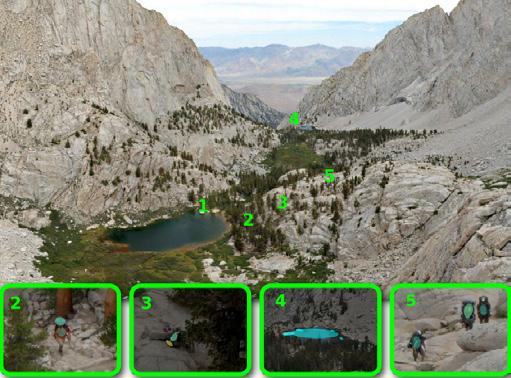
The study [20] discussed the apparent contradiction between the need to pre-process initial data (ℤ1) for quicker reactions and the demand to enhance ℤ1 with more realism in visualization tasks, as in Fig. 8 [21]. As the visualization process progresses, specific models are refined, reducing uncertainty and leading to a more focused data alphabet (ℤn) with lower entropy, aligning with the theory presented in reference [21].
8. Conclusion
This study is innovative because it makes significant contributions to the theory of uncertain reasoning and investigates inference procedures based on RGEs. Novel Characterization for q > −1, q ≠ 0, inference process Uq(K) by a functional equation is devised. First time unification of the inference process Uq(K) for q > −1, q ≠ 0 with semi- group theory is obtained. Also, the threshold theorems for the IF were devised. Furthermore, numerical experiments are illustrated. The complex proofs in our paper are original results which emphasizes the credibility of the class of RGEs as measures of information, and that the field is open to extend an enhanced methodology regarding queuing networks with heavy tails.
On the other remit of the spectrum, there are several emerging open problems:
I. There are challenges and advantages of conducting online health information system experiments compared to traditional psychological lab experiments [13]. Online experiments offer scalability and flexibility in research tasks but are susceptible to environmental noise, which can complicate the detection of subtle psychological and behavioural traits. Based on the feasibility, researchers can conduct A-B testing research using real-world health information websites or applications to establish baseline models and experiment with single variables confidently for desired behavioural modelling.
II. The study [13] flagged concerns about data quality when using online labour markets like MTurk for research recruitment. So, it is highly suggested to improve data collection by considering the behavioural response patterns of MTurk workers and exploring additional data collection methods like mousing, eye-movement, and biometric measures for better modelling in online health information systems.
III. In a rare study [22] linking information theory and thermodynamics, A Mageed highlighted how statistical mechanics aids in scientific reasoning by preventing unconscious biases. These scientific methods [15], honed by renowned scientists and refined by successive generations, have significantly shaped our modern era. The emphasizes the importance of learning from established scientific methodologies to create sophisticated and effective theories for research and design, particularly in the realm of UIs and interactions, which offers several unsolved open problems till current.
IV. The comparison between 3D visualization and 2D visualization for 3D data involves evaluating factors like alphabet compression [20], potential distortion, cognitive cost, and economic cost. The choice between 3D and 2D visualization depends on the viewer's familiarity with the data variations, where 2D visualization may be more beneficial in some cases due to lower potential distortion and cognitive cost. The analysis emphasizes the importance of considering these factors to optimize the visualization process based on cost-benefit metrics. The question regarding the necessity of 3D visualization for 3D data does not have a simple yes or no answer but requires an optimization solution based on a cost-benefit analysis. It emphasizes the importance of considering the impact of potential distortion on decision-making processes and suggests comparing different display technologies, such as gigapixel displays versus desktop displays, to maximize benefits in visualization tasks. Additionally, it mentions the application of the analysis to compare different representations of 3D geometric models on 2D displays for effective decision-making in visualization contexts.
There are several avenues for future work. One possibility is to investigate these information theoretic properties for other entropies such as Tsallis [23] and other higher order generalized such as Generalized Z-entropy, which is a generalization to many entropy functionals such as Tsallis and Rényi [22-29]. Also, future research may include exploring possible solutions to the proposed open problems.
Acknowledgements
The author wishes to express his sincerest thanks to Dr. Kabiru Miyama, Lecturer at the University of Bradford International College, UK, for the most professional drawing of the curves of Fig. 1 and Fig. 2.
Authors' Contributions
All research activities and manuscript development were conducted by the author, who also approved the final manuscript.
Consent for Publication
The author has approved the manuscript for publication.
Ethics Approval and Consent to Participate
This article does not include experiments involving humans or animals.
Funding
This research received no specific grant from funding agencies in the public, commercial, or not-for-profit sectors.
Data Availability
All data are included in the text.
Conflict of Interest
The authors declare no conflict of interest.
Figures
References
- [1] Mohamed, I. A. M., & Kouvatsos, D. D. (2011). Extended properties of the class of rényi generalized entropies in the discrete time domain. International conference on computer networks and information technology (pp. 1–7). IEEE. https://doi.org/10.1109/ICCNIT.2011.6020894
- [2] LU, Z. (2016). Functional equations. https://www.math.uci.edu/~mathcircle/materials/M6L2.pdf
- [3] Cain, A. J. (2016). Nine chapters on the semigroup art. https://citeseerx.ist.psu.edu/document?repid=rep1&type=pdf&doi=7a8e95f05185b964829ae7e8f1617ecf56 0f3cf2
- [4] Mageed, I. A., & Zhang, Q. (2023). Threshold theorems for the tsallisian and rényian (TR) cumulative distribution functions (CDFs) of the heavy-tailed stable M/G/1 queue with tsallisian and rényian entropic applications to satellite images (SIs). Electronic journal of computer science and information technology, 9(1), 41–47. https://doi.org/10.52650/ejcsit.v9i1.161
- [5] Liu, W., Oulasvirta, A., Rioul, O., Beaudouin-Lafon, M., & Guiard, Y. (2019). Information theory: An analysis and design tool for HCI [presentation]. CHI 2019 - the acm CHI conference on human factors in computing systems - workshop on computational modeling in human-computer interaction. https://hal.telecom-paris.fr/hal-02300784
- [6] Parziale, A., Senatore, R., & Marcelli, A. (2020). Exploring speed-accuracy tradeoff in reaching movements: A neurocomputational model. Neural computing and applications, 32(17), 13377–13403. https://doi.org/10.1007/s00521-019-04690-z
- [7] Prasetiyowati, M. I., Maulidevi, N. U., & Surendro, K. (2021). Determining threshold value on information gain feature selection to increase speed and prediction accuracy of random forest. Journal of big data, 8(1),
- [84] https://doi.org/10.1186/s40537-021-00472-4
- [8] Barutchu, A., & Spence, C. (2021). Top–down task-specific determinants of multisensory motor reaction time enhancements and sensory switch costs. Experimental brain research, 239(3), 1021–1034. https://doi.org/10.1007/s00221-020-06014-3
- [9] Blandino, M., Berdahl, E., & Soukoreff, R. W. (2020). An estimation and comparison of human abilities to communicate information through pursuit tracking vs. pointing on a single axis. Advances in intelligent systems and computing (Vol. 956, pp. 247–257). Springer. https://doi.org/10.1007/978-3-030-20037-4_22
- [10] Liu, W., Gori, J., Rioul, O., Beaudouin-Lafon, M., & Guiard, Y. (2020). How relevant is hick’s law for HCI? [presentation]. Proceedings of the 2020 CHI conference on human factors in computing systems (pp. 1– 11). https://doi.org/10.1145/3313831.3376878
- [11] Zhang, M. R., Zhai, S., & Wobbrock, J. O. (2019). Text entry throughput: towards unifying speed and accuracy in a single performance metric [presentation]. Proceedings of the 2019 CHI conference on human factors in computing systems (pp. 1–13). https://doi.org/10.1145/3290605.3300866
- [12] Zhang, C., Li, S., Song, Y., Lu, L., & Hou, M. (2021). TouchSense: Accurate and transparent user re-authentication via finger touching. Edge computing and IoT: systems, management and security: first EAI international conference, ICECI 2020, Virtual event, November 6, 2020, proceedings 1 (pp. 105–125). Springer International Publishing. https://doi.org/10.1007/978-3-030-73429-9_7
- [13] Chen, T., & Details, P. author. (2022). Decision dynamics and human-computer interaction in online health information seeking: a behavioral information research exploration. The Florida State University. https://www.proquest.com/openview/775ef002b070ba70a050c7e0a04081b5/1?pq-origsite=gscholar&cbl=18750&diss=y
- [14] Blandino, M. V. (2021). Musical gesture through the human computer interface: an investigation using information theory. Louisiana State University and Agricultural & Mechanical College. https://doi.org/10.31390/gradschool_dissertations.5535
- [15] Chong, L. (2023). Temperature, entropy, and usability: The theoretical and practical resemblances between thermodynamics and user interface design. International conference on human-computer interaction (pp. 16–24). Springer. https://doi.org/10.1007/978-3-031-35989-7_2
- [16] Chen, M., Gaither, K., John, N. W., & Mccann, B. (2019). An information-theoretic approach to the cost-benefit analysis of visualization in virtual environments. IEEE transactions on visualization and computer graphics, 25(1), 32–42. https://doi.org/10.1109/TVCG.2018.2865025
- [17] Bock, A., Axelsson, E., Emmart, C., Kuznetsova, M., Hansen, C., & Ynnerman, A. (2018). Openspace: Changing the narrative of public dissemination in astronomical visualization from what to how. IEEE computer graphics and applications, 38(3), 44–57. https://doi.org/10.1109/MCG.2018.032421653
- [18] Villard, P. F., Vidal, F. P., ap Cenydd, L., Holbrey, R., Pisharody, S., Johnson, S., … & Gould, D. (2014). Interventional radiology virtual simulator for liver biopsy. International journal of computer assisted radiology and surgery, 9(2), 255–267. https://doi.org/10.1007/s11548-013-0929-0
- [19] Ip, C. Y., & Varshney, A. (2011). Saliency assisted navigation of very large landscape images. IEEE transactions on visualization and computer graphics, 17(12), 1737–1746. https://doi.org/10.1109/TVCG.2011.231
- [20] Miles, H. C., Pop, S. R., Watt, S. J., Lawrence, G. P., John, N. W., Perrot, V., … & Morgan, K. (2014). Efficacy of a virtual environment for training ball passing skills in rugby. Transactions on computational science XXIII: special issue on cyberworlds (pp. 98–117). Berlin, Heidelberg: Springer Berlin Heidelberg. https://doi.org/10.1007/978-3-662-43790-2_6
- [21] Chen, M., & Golan, A. (2015). What may visualization processes optimize? IEEE transactions on visualization and computer graphics, 22(12), 2619–2632. https://ieeexplore.ieee.org/abstract/document/7368928/
- [22] A Mageed, I. (2023). The entropian threshold theorems for the steady state probabilities of the stable M/G/1 queue with heavy tails with applications of probability density functions to 6G networks. Electronic journal of computer science and information technology, 9(1), 24–30. https://doi.org/10.52650/ejcsit.v9i1.138
- [23] A Mageed, I., & FRSS, I. (2023). Where the mighty trio meet: information theory (IT), pathway model theory (PMT) and queueing theory (QT) [presentation]. 39th Annual UK Performance Engineering Workshop (p. 8). https://www.researchgate.net/profile/Nigel-Thomas-8/publication/376305981_UKPEW_2023/links/6571edc2cbd2c535ea04874e/UKPEW-2023.pdf#page=10 https://l1nq.com/YnGd3
- [24] Mageed, I. A., & Bhat, A. H. (2022). Generalized z-entropy (Gze) and fractal dimensions. Applied mathematics & information sciences, 16(5), 829–834. https://doi.org/10.18576/amis/160517
- [25] Mageed, I. A., & Zhang, Q. (2023). The rényian-tsallisian formalisms of the stable M/G/1 queue with heavy tails entropian threshold theorems for the squared coefficient of variation. Electronic journal of computer science and information technology, 9(1), 7–14. https://doi.org/10.52650/ejcsit.v9i1.135
- [26] Mageed, I. A., & Zhang, Q. (2023). Formalism of the rényian maximum entropy (RMF) of the stable M/G/1 queue with geometric mean (GeoM) and shifted geometric mean (SGeoM) constraints with potential geom applications to wireless sensor networks (WSNs). Electronic journal of computer science and information technology, 9(1), 31–40. https://doi.org/10.52650/ejcsit.v9i1.143
- [27] Bhat, A. H., Siddiqui, N. A., Mageed, I. A., Alkhazaleh, S., Das, V. R., & Baig, M. A. K. (2023). Generalization of renyi’s entropy and its application in source coding. Applied mathematics & information sciences, 17(5), 941–948. https://doi.org/10.18576/amis/170521
- [28] Mageed, I. A., Zhang, Q., & Modu, B. (2023). The linearity theorem of rényian and tsallisian maximum entropy solutions of the heavy-tailed stable M/G/1 queueing system entailed with potential queueing-theoretic applications to cloud computing and IoT. Electronic journal of computer science and information technology, 9(1), 15–23. https://doi.org/10.52650/ejcsit.v9i1.136
- [29] Mageed, I. A. (2023). Rényi’s maximum entropy formalism of heavy-tailed queues with hurst exponent heuristic mean queue length combined with potential applications of hurst exponent to engineering [presentation]. 39th Annual UK Performance Engineering Workshop (p. 21). https://www.researchgate.net/profile/Nigel-Thomas-8/publication/376305981_UKPEW_2023/links/6571edc2cbd2c535ea04874e/UKPEW-2023.pdf#page=23